
Recumbent Bike vs. Upright Bike: Which Exercise Bike is Right for You?
Choosing the right exercise bike can be a challenge, especially when you’ve narrowed your options down to two popular choices: the recumbent bike and the upright bike. Both offer excellent cardiovascular workouts, but their distinct designs cater to different needs and preferences. This guide will break down the key differences to help you decide which bike aligns best with your fitness goals and body.

Contents
- Recumbent and Upright Bike Overview
- Head-to-head breakdown
- Detailed comparison table
- The final verdict: Who should buy which?
TL;DR
This guide compares recumbent and upright exercise bikes, highlighting their distinct designs, comfort, and workout styles to help users choose the best option for their fitness goals. The recumbent bike prioritises comfort, stability, and low-impact steady-state cardio, while the upright bike is more versatile for intense, cycling-mimicking workouts and suits those with limited space.
Key Points
- The fundamental difference lies in core design and seating position: the recumbent bike offers a reclined, supported, chair-like seat, prioritising comfort and stability, while the upright bike features a traditional, unsupported saddle, mimicking an outdoor bike.
- The Head-to-Head Breakdown highlights key differences, finding the recumbent bike superior for comfort and safety in low-impact workouts, and the upright bike better suited for versatile, high-intensity workouts that engage more muscle groups and require less space.
- Our Final Verdict recommends the recumbent bike for individuals with physical limitations, balance concerns, or those prioritising comfort. It suggests the upright bike for more mobile users seeking intense workouts, mimicking outdoor cycling, or requiring a compact solution.
Recumbent and Upright Bike Overview
Recumbent Bike Overview
The recumbent bike features a reclined, chair-like seat with a backrest, positioning the pedals out in front of your body. This design provides a fully supported, seated workout experience, making it a favourite for those prioritising comfort and stability.
Upright Bike Overview
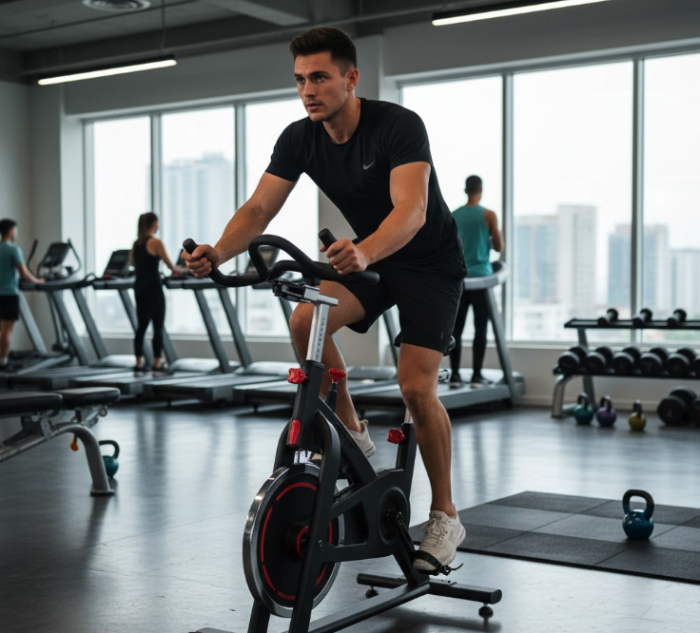
The upright bike mimics a traditional bicycle, with a smaller, saddle-style seat and no back support. The pedals are positioned directly underneath the rider, encouraging an upright or slightly forward-leaning posture, similar to outdoor cycling.

The Head-to-Head Breakdown
Core Design and Seating Position
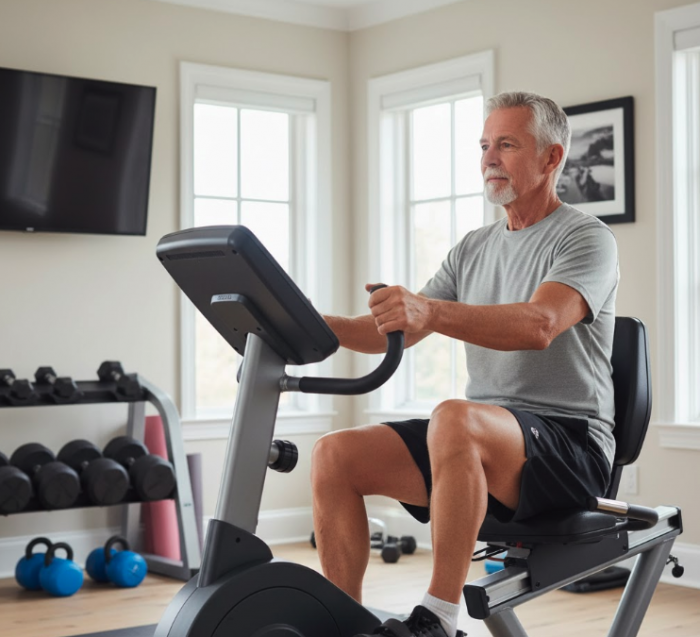
- Recumbent: Designed with a reclined, chair-like seat and a supportive backrest, the pedals are positioned out in front. This design places the user in a comfortable, seated, and fully supported position.
- Upright: Features a small, traditional bicycle-style saddle with no back support. The pedals are directly underneath the user, who maintains an upright, forward-leaning posture.
Comfort and Ergonomics
- Recumbent: Offers superior comfort due to its large, cushioned seat and back support, which evenly distributes weight. This design significantly reduces pressure on the lower back, hips, and glutes, making it an excellent choice for individuals with physical limitations or those seeking a more relaxed workout.
- Upright: The smaller saddle can place pressure on the sitting bones, potentially causing discomfort during longer workouts. The forward-leaning posture may also strain the back or wrists for some users, although many find it perfectly comfortable for varied workout intensities.
Workout Intensity and Type

- Recumbent: Ideal for low-impact, steady-state cardio. While it’s generally more challenging to perform high-intensity interval training (HIIT) in a reclined position, it’s still possible to achieve an effective cardio workout and build endurance.
- Upright: Considered the more versatile option, it closely mimics outdoor cycling, allowing for both seated and standing pedalling. This design makes it perfect for a variety of workouts, including HIIT. It can lead to a slightly higher calorie burn in the same amount of time due to engaging more muscle groups, including the core and upper body.
Safety and Stability
- Recumbent: Boasts excellent safety features with its low-to-the-ground seat and wide base, providing superior stability. This design significantly reduces the risk of falling, making it a major benefit for seniors or individuals with balance issues.
- Upright: Features a higher centre of gravity and requires more core stability and balance, similar to riding a regular bike. While this can be a pro for engaging core muscles, it might be a drawback for individuals with mobility challenges.
Space and Footprint
- Recumbent: These bikes typically have a larger footprint due to their length and are less likely to be foldable. They require a dedicated floor space in your home gym.
- Upright: Known for their compact nature, upright bikes take up less floor space due to their vertical design. Many models are foldable, making them an excellent choice for smaller apartments or limited home gym areas.
Detailed Comparison Table
For a more direct comparison, we have broken down key information as outlined below.
| Feature | Recumbent Bike | Upright Bike |
| Seating Position | Reclined, chair-like seat with backrest, pedals in front. | Small, traditional saddle with no back support, pedals underneath. |
| Comfort | High; even weight distribution, reduced pressure on back, hips, and glutes. | Moderate; pressure on sitting bones, potential strain on back/wrists. |
| Workout Type | Low-impact, steady-state cardio; harder for HIIT. | Versatile; mimics outdoor cycling, suitable for HIIT, seated and standing pedalling. |
| Muscle Engagement | Primarily lower body. | Lower body, core, and some upper body. |
| Safety/Stability | High; low-to-the-ground seat, wide base, reduced fall risk. | Moderate; higher centre of gravity, requires more core stability and balance. |
| Space & Footprint | Larger footprint, less likely to be foldable. | Compact, vertical design, many models are foldable. |
| Ideal For | Back/hip/knee pain, seniors, injury recovery, comfort priority, and balance concerns. | Intense workouts, mimicking outdoor cycling, no physical limitations, limited space. |
The final verdict: Who should buy which?
Choose the Recumbent Bike if…
- You experience back, hip, or knee pain.
- You are a senior or recovering from an injury.
- You prioritise comfort and a relaxed workout experience.
- You want to read or watch TV while you exercise.
- You have concerns about balance or stability.
Choose the Upright Bike if…
- You desire a more intense workout or wish to mimic outdoor cycling.
- You are healthy and have no significant physical limitations.
- You are short on space and need a compact exercise solution.
- You want to engage more of your core and upper body during your workout.
Find the right bike for your needs with FitKit UK
Both recumbent and upright bikes offer fantastic ways to boost your cardiovascular health and fitness. The best choice ultimately comes down to your personal needs, physical condition, and workout preferences. Consider what feels most comfortable and motivating for you to ensure you stick with your fitness journey.


Related Posts
Comments are closed here.