
Strength Workout For Runners: 10 Exercises To Try

If you’re a runner and want to strengthen your legs to run faster and for longer – you are in the right place. At FitKit, we know how to help you create quads of steel and calves Jack Grealish would be jealous of, so we’re giving you the lowdown on the 10 best gym exercises for runners. Try our gym workout for runners and watch your PB time lower and your name rise on the running club leaderboard.
Contents
- Do runners need strength training?
- How often should runners strength train?
- Benefits of strength training for runners
- Gym exercises for runners
- Gym workouts for runners
Do runners need strength training?
Many runners ask themselves: Do I need to train in the gym if I’m running on the track? The answer is yes. There are many benefits to strength training for runners, which we will cover later—but in short, strength training can help reduce injuries, increase speed, and improve race times. Strength training for runners can also help runners with stability and strength and reduce the number of repetitive strain injuries.

How often should runners strength train?
You may not want to spend time in the gym when you could be running, but it is important to incorporate some form of strength training into your regime around two to three times a week. The time spent in the gym for runners should include strength training for legs and core and some dedicated stretching and recovery time.
Benefits of strength trainers for runners:
If your PB time has stagnated and you can’t seem to shave off those valuable seconds from your time.
Here are some of the benefits of strength training for runners:
1. Helps prevent injuries
We hope you haven’t experienced too many injuries in your running career, but we know it can be common to strain muscles when running. Combining strength training and running can help reduce the risk of injury and ensure you stay on the track instead of on the sidelines.
Runners need to have a strong core and legs to reach their full potential, and training these muscle groups in the gym can help you efficiently and safely push power through every stride. Studies have shown that strength training can reduce the risk of repetitive strain injury by almost half and sports injuries by a third.

2. Run faster for longer distances
Strength training can help increase coordination and strength in key muscles when running, which improves running economy.
Running economy is the energy needed to activate muscles at a given speed. By strengthening these muscles, you will use less exertion, allowing you to go faster for longer distances.
3. Improvement to your V02 Max over time
V02 Max is the maximum rate of oxygen your body uses during running; the higher your V02 max, the better your body will convert oxygen into energy. Adding strength training to your regime can help increase your V02 max over time and improve your endurance and speed whilst running.

4. Allows you to switch it up
We know you love to run, but switching up your fitness regime from time to time can be beneficial in keeping your love for running potent. By adding strength training to your week, you will experience the motivational benefits as you start to feel stronger and fitter. This will encourage you not to flatline and keep your running efforts exciting.
Gym exercises for runners
Now, onto the good stuff; here are our top 10 gym exercises for runners. Covering a range of muscle groups, these exercises will help you strengthen all the vital components you need when running:
Calf Raises
Strong calves are important for runners as they help lift your feet, push forward, and land with every step. Strengthening your calf muscles is easy in the gym with calf raise machines, but there are alternative ways to complete the exercise if your gym doesn’t have one.
How to perform a calf raise on a calf raise machine
- Load the machine with your desired weight.
- Sit on the calf raise machine with the balls of your feet on the platform and your toes pointing forward. Your heels will naturally hang off the end of the machine.
- Position your quads underneath the knee pad and rest your hands on top.
- Release the safety bar by extending your ankles.
- Lower your heels until your calves are fully stretched.
- Extend the ankles and flex the calves.
- Repeat the movement for your desired number of reps.
Top Tip: Move through the ball of the foot rather than the base of the toes, as this will activate your calf muscles.
If your gym doesn’t have a calf raise machine, you can still perform a calf raise by completing the following exercise.
How to perform a calf raise without a machine
- Grab your desired weight with dumbbells and sit upright on a gym bench.
- Place the dumbbells on your knees with the plate resting comfortably.
- Drive your toes into the ground and lift your ankle off the floor, pushing the dumbbell upwards.
- Return to the original position and repeat.

Deadlifts
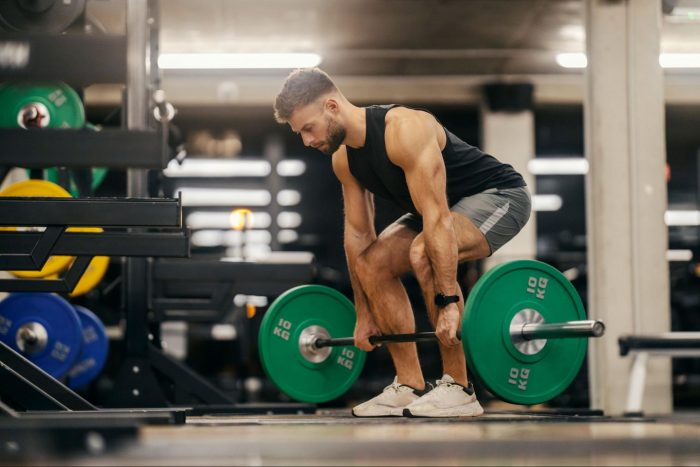
One of the most effective exercises in the gym, the deadlift is a compound movement that can help improve posture and strengthen muscles in the back, legs and shoulders. Deadlifting is a great way to strengthen your hips, which runners with bad form often struggle with.
If you incorporate deadlifts into your workout, you can absorb impact better and put more force into the ground without injury, which is great for those who frequently pound the pavement and don’t want to feel niggles in their legs or hips.
The exercise can also be great for your running alignment, making you hinge forward at the hip and aligning your trunk with your knees as you would when running. Becoming stronger with deadlifts will strengthen your posterior chain, and your hamstrings and glutes will help drive power more effectively.
Squats
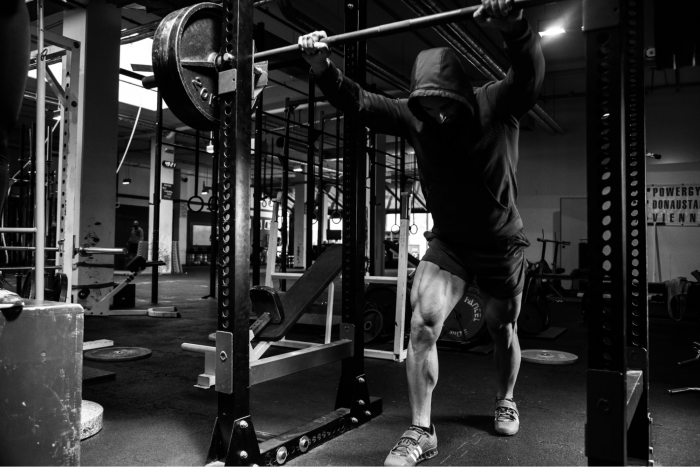
Targeting the quads, glutes, hamstrings and lower back, squatting is a great way to strengthen your lower body. If squats are performed correctly, they can be both a strength and flexibility exercise and improve the range of motion for joints, assisting with running strides. As squats rely on force production and driving power through the legs, you will find that as your squatting technique develops, so will the power in your running stride.
If you squat correctly and complete the full range of motion, you can also reduce your risk of knee injuries. As running is an exercise with such a short range of motion, it can cause muscles and tendons around the knee joint to become tight. Performing squats with a full range of motion can prepare and strengthen your knees for running, which is especially important if you run on uneven terrain or down hills.
Lunges
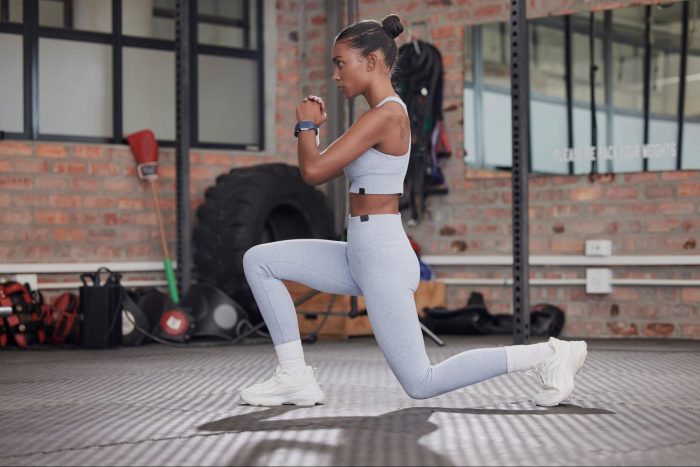
Lunges in any capacity are great for runners as the movement of the lunge mirrors elements of running and can help strengthen key muscles. Known as a lower body unilateral exercise, the single-leg movement will help move the muscles on each side of your body independently. This helps develop your lower body muscles with stability, balance and coordination.
These are the different types of lunges you can perform to help your running efforts:
- Reverse lunge
- Forward lunge
- Walking lunge
- Pendulum lunge
- Lunge to step up
- Lateral lunge
- Curtsey lunge
Plank
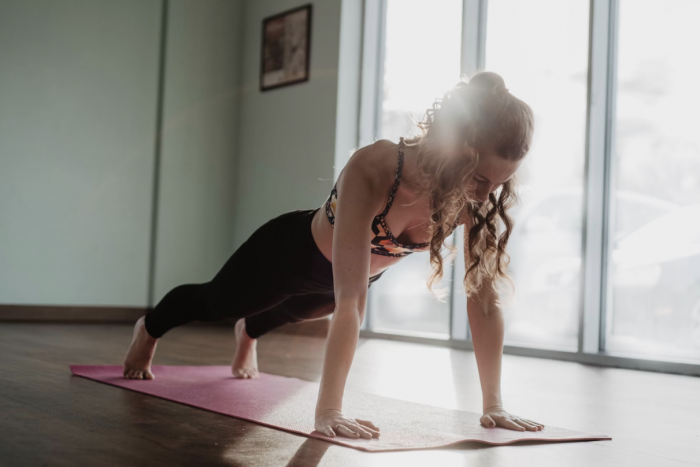
Runners need a strong core, and planking is the perfect way to develop your abs. Muscles activated when performing a plank include glutes, quads, shoulders, arms, and core. Like most exercises outlined within this programme, the aim is to increase stability and coordination—the plank is the perfect way to hit both.
Planking can also help with your posture, which is vital for runners to ensure your spine is properly aligned and primed for high-intensity exercise.
Top tips for planking
- If you are new to planking, start with a low time and build gradually.
- Incorporate plank variations (knee planks for beginners, side plank, plank with shoulder tap, forearm plank).
- Add planking to the start of your workout routine.
- Try to keep yourself distracted whilst performing a plank.
Glute Bridge
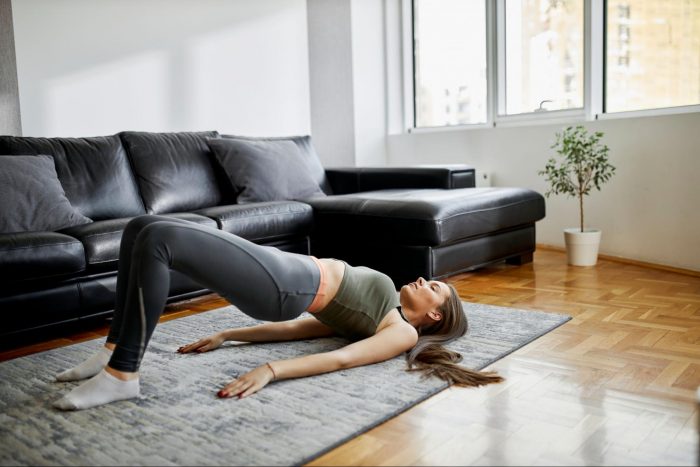
Glute bridges target your hamstrings, glutes, and core muscles, which are key muscles for runners. Benefits of the glute bridge include increased hip flexibility and lower back health, which is important for runners to prioritise to minimise injury. Hip flexibility for runners is an area that always needs focus, as running can shorten the hip flexors, causing stiffness and pain.
At the top of the glute bridge, you will feel your hip flexor muscles stretch; extending in this position will help improve your hip extension and internal and external rotation. Glute bridges are also great for strengthening your core stability and helping to fight underactivity in your glutes.
Deadbugs
Another core exercise that promotes core stability and coordination is the dead bug. A fairly easy exercise that doesn’t need any equipment except an exercise mat, the benefits of completing the dead bug include:
- Promoting core stability.
- Improving contra-lateral limb engagement (Improving coordination when moving limbs in tandem).
- Encourages deep stabilisation of your lower back muscles.
Some common mistakes for individuals performing dead bugs
Some common mistakes arise when performing dead bugs; we will outline them to ensure you perform them efficiently.
- Moving too fast – Often confused with the bicycle crunch, the dead bug is a slower movement, and when performed slowly, you will engage your core muscles effectively.
- Arching your lower back – To fully engage your core, make sure your lower back doesn’t lift from the floor. If your back does lift from the floor, you may have a weak core, and reminding yourself to reduce the space between your back and the floor is paramount.
Wall Sits
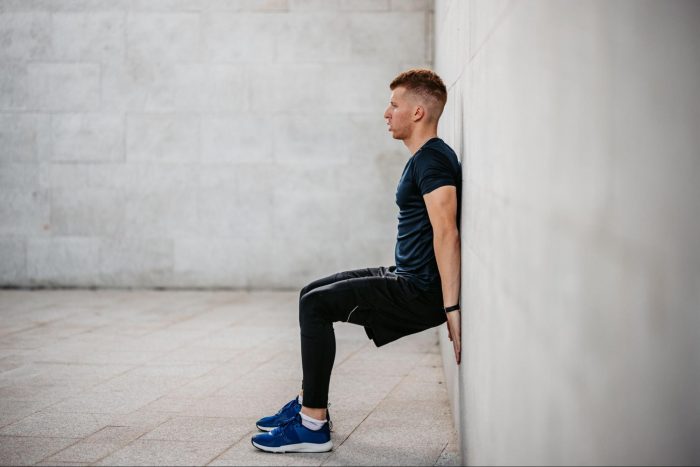
Anyone who has ever done a wall sit before will know how challenging they can be. They are hard because they have a lot of benefits that come with them, including strengthening muscles in your legs, core and glutes. Wall sits are also the perfect exercise for endurance and stamina, both key components of a determined runner.
There’s no equipment needed for this exercise; all you need is a wall and some determination. Wall sits will help build strength in your legs, benefitting you when running. However, if you have runner’s knee or any knee injuries, skip this exercise until you are healed.
Side-lying leg raises
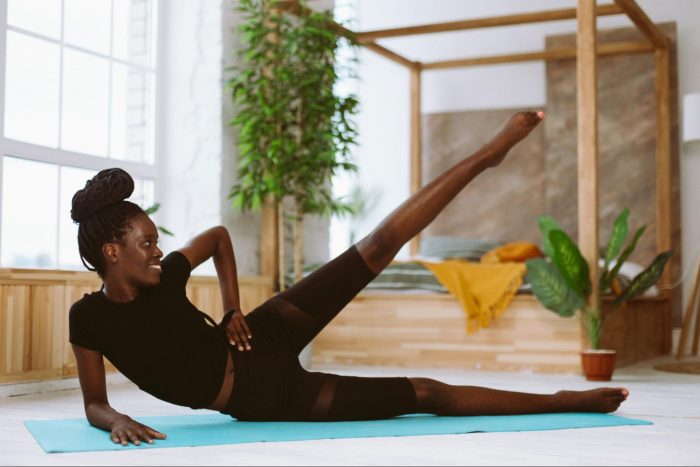
With side-lying leg raises, we are targeting the inner thighs and adductors, as well as muscles within the core, such as the obliques and lower back. Activating these muscles will help with stability whilst running and allow you to have a core of steel.
Side-lying leg raises can be completed without resistance, or if you are looking for a challenge, you can add a resistance band around your legs. This exercise is great for hip mobility, which, as previously mentioned, is great for runners. You will find your hip muscles are activated upon both the lowering and raising parts of the exercise.
Fire hydrants
Like side-lying leg raises, the fire hydrant exercise strengthens hips and activates your glutes. Both the hips and glutes are essential for runners, and adding a set of fire hydrants into your workout regime will make you feel more comfortable on the track.
There are many benefits to completing fire hydrants, which include:
- Sculpting your glutes.
- Hip extension and rotation – which is great for mobility and running.
- Core activation.
Sample Gym Workouts For Runners
Now that you are familiar with the gym exercises suited towards runners take a look at our recommended gym workouts:
Workout 1
- Calf Raises (3 x 12 reps)
- Deadlifts (3 x 10 reps)
- Walking lunges (holding dumbbells in each hand – 10 steps x 4)
- Plank (1-minute hold x 3)
- Deadbugs (3 x 10 reps)
- Fire hydrants (3 x 10 reps)
- Wall sit (hold until failure)
Workout 2
- Calf Raises (3 x 12 reps)
- Squats (3 x 8 reps)
- Forward lunges (holding dumbbells in each hand – 4 x 8 reps)
- Plank (1-minute hold x 3)
- Glute bridge (4 x 8 reps)
- Side-lying leg raises (3 x 10 reps)
- Fire hydrants (3 x 10 reps)
Get your running PB with FitKit today
At FitKit, we have a wide range of running gym equipment you can use in your home gym, such as the latest treadmills from the likes of Life Fitness and Technogym. If you are a commercial gym looking to add machines to your fitness space that will benefit runners and the running community, why not explore the selection of cardio and strength training equipment available? You will find commercial-grade fitness equipment designed to withstand use and help you deliver results.
Comments are closed here.