
The Rep Range Mistake That’s Killing Your Dumbbell Workouts
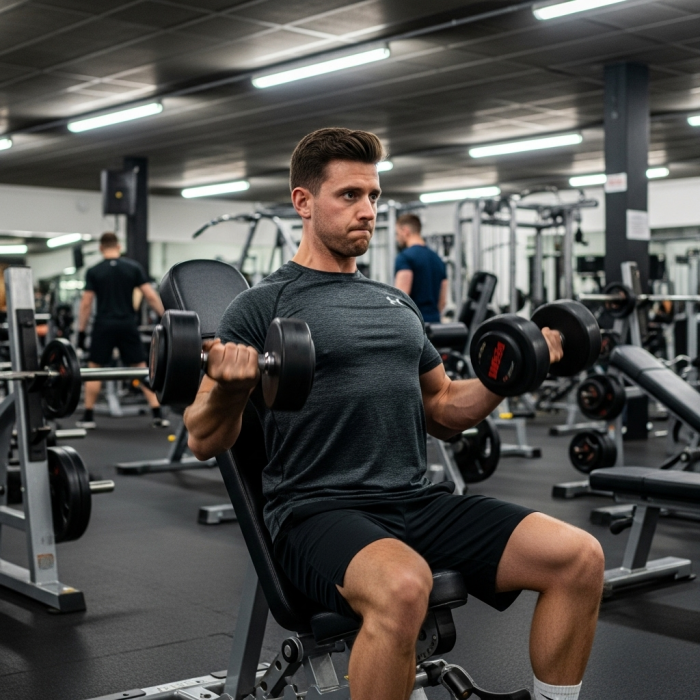
Often overlooked in the shadow of barbells, dumbbells offer a versatile and accessible path to significant muscle growth and strength progression. Whether you’re just starting your fitness journey in a home gym or looking to break through plateaus in a bustling commercial setting, understanding how to manipulate dumbbell weight and rep ranges is crucial.
At FitKit UK, we know a thing or two about these core concepts, and in this guide, we will show you how to unlock your full potential for muscle gain. From understanding key terms to showcasing how you can apply training concepts, such as hypertrophy, in your sessions, we’ll cover it all.
Contents
- Key Terminology
- Rep Ranges
- Dumbbell Weight For Progression
- Dumbbell Workout for Progression
- Common Mistakes and How To Avoid Them
Key Terminology
- Repetition (Rep): A single, complete execution of an exercise. Think one dumbbell curl.
- Set: A collection of reps performed consecutively. So, if you do 10 curls, that’s one set of 10 reps.
- Weight: The resistance your dumbbells provide.
- Rep Range: The target number of repetitions for a set (e.g., 8-12 reps).
- Repetition Maximum (RM): The heaviest weight you can lift for a specific number of reps (e.g., your 10RM is the heaviest weight you can lift for 10 reps).
At the heart of muscle growth (hypertrophy) lies progressive overload. This fundamental principle means continually challenging your muscles more than they’re accustomed to. This challenge comes from three main drivers:
- Mechanical Tension: The strain and stretch placed on muscle fibres when lifting.
- Muscle Damage: Micro-tears in the muscle tissue that stimulate repair and, crucially, growth.
Metabolic Stress: The “pump” and accumulation of metabolic byproducts, contributing to cellular swelling and growth signals.
Rep Ranges

Different rep ranges elicit different responses from your muscles, all contributing to growth in unique ways. Understanding rep ranges and their outcomes in relation to your desired goals is important when creating a gym workout.
The Hypertrophy Zone (6-12 Reps)
This is often considered the sweet spot for muscle growth. In this range, you typically lift a moderate to heavy weight, allowing for a good balance of mechanical tension and metabolic stress. You should feel a significant burn towards the end of your set, and your muscles should be challenged.
- Examples: Dumbbell bicep curls, shoulder presses, chest presses, and rows.
Lower Rep Ranges (1-5 Reps): Strength First
While primarily focused on building strength, this range indirectly fuels muscle growth. By getting stronger, you’ll eventually be able to lift heavier weights in the 6-12 rep range, thereby increasing the mechanical tension for more hypertrophy. Here, weights are heavy, and rest periods are longer.
- Examples: Heavy dumbbell bench press, dumbbell deadlifts (if applicable for your setup).
Higher Rep Ranges (15+ Reps): Endurance & The Pump
These sets focus on muscular endurance and maximise metabolic stress. You’ll use lighter weights, but the sustained tension and accumulation of lactic acid will create a significant “pump.” This can contribute to growth through cell swelling and other metabolic pathways.
- Examples: Dumbbell lateral raises, front raises, high-rep goblet squats.
TLDR – Rep Ranges
- Hypertrophy zone: Sweet spot for muscle growth (moderate to heavy)
- Low rep ranges: Focuses on building strength (heavy weight)
- High rep ranges: Focuses on muscular endurance (lighter weight)
Varying your rep ranges over time is a smart way. This technique, known as periodisation, prevents plateaus, keeps your training fresh, and ensures comprehensive muscle development by targeting different adaptations.
Dumbbell Weight For Progression

It’s not just about picking up the heaviest dumbbell; it’s about picking the right one for the right rep range. There are a few ways to choose the right dumbbell weight, which we will explore in further detail in the next section. Alternatively, we have a specific blog post detailing How to Choose the Right Dumbbell Weight.
The RPE/RIR Method
A great way to gauge your effort is using RPE (Rate of Perceived Exertion) or RIR (Reps In Reserve).
- RPE: Rate your effort on a scale of 1-10 (10 being maximum effort, couldn’t do another rep). For hypertrophy, aim for an RPE of 7-9.
- RIR: How many more reps could you have done if you pushed it? For muscle growth, aim for 1-3 RIR.
If you can easily hit the top of your target rep range with 3+ reps left in the tank, it’s time to increase your weight.
Strategies for Progressive Overload with Dumbbells:
- Increase Weight: The most straightforward method.
- Increase Reps: Aim for more reps with the same weight.
- Increase Sets: Do more total work by adding sets.
- Decrease Rest Time: Challenge your endurance and metabolic stress.
- Improve Form/Tempo: Focus on a slower, controlled movement (especially the lowering phase) for greater time under tension.
Always remember: proper form is paramount. Lifting with bad form not only increases your risk of injury but also reduces the effectiveness of the exercise for muscle growth.
Dumbbell Workout for Progression

Dumbbells are incredibly versatile. You can build a complete workout program around them.
Compound Movements: These work multiple muscle groups and are great for overall strength and mass (e.g., Dumbbell Squats, Bench Press, Rows, Overhead Press, Deadlifts).
Isolation Movements: These target specific muscles (e.g., Bicep Curls, Triceps Extensions, Lateral Raises).
For beginners, a full-body workout 2-3 times a week is excellent. As you progress, you might move to an upper/lower split or even a Push/Pull/Legs (PPL) split. Always include a warm-up before your working sets and a cool-down afterwards.
Crucially, track your progress. A simple workout journal (or the notes app on your phone) where you record the weight, reps, and sets for each exercise will be your best friend in ensuring consistent progressive overload.
Common Mistakes and How To Avoid Them
- Ego Lifting: Don’t lift more than you can handle with good form. Quality over quantity.
- Not Tracking Progress: If you don’t know what you did last week, how can you improve this week?
- Inconsistency: Muscle growth is a marathon, not a sprint. Show up regularly.
- Ignoring Nutrition and Recovery: Your muscles grow when you rest and fuel them properly, not when you’re lifting.
- Plateaus: They happen! When progress stalls, try deloading (reducing weight for a week), changing exercises, or varying your rep ranges.
Muscle growth and progression with dumbbells from FitKit UK
Dumbbells are a powerful tool in your muscle-building arsenal. By understanding the interplay of weight and rep ranges, applying the principle of progressive overload, and maintaining consistency with good form, you have a clear blueprint for significant muscle growth and strength progression. So, grab those dumbbells, track your progress, and enjoy the journey of building a stronger you!

Related
Comments are closed here.