
How to Improve Your Endurance: Cardio, Strength, and Stamina Workouts
If you want to feel fitter, you don’t necessarily have to run a marathon. Whether you want to improve your recovery between heavy lifts or just weather-proof your fitness routine against the unpredictable UK climate, building endurance is the ultimate life hack for energy and longevity.
But where do you start when the fitness world makes it all sound so complicated?
This guide breaks down exactly what endurance is, how to build it without pounding the pavement, and the best ways to train at home or at your local gym.
TL;DR: The Quick Summary
- What it is: Cardiovascular endurance measures how efficiently your heart and lungs supply oxygen, while muscular endurance dictates how long your muscles can sustain repeated contractions under load. You need both for overall fitness.
- The Method: You don’t need to spend hours running on a treadmill. You can build total-body stamina using functional fitness tools like rowers, kettlebells, and cable machines.
- The Strategy: Follow the 80/20 rule: spend 80% of your training time on steady, low-intensity movement (Zone 2) and 20% on high-intensity interval training (HIIT).
- Recovery: Fuel with simple carbohydrates before training and hydrate effectively afterwards to avoid the “post-workout crash.”
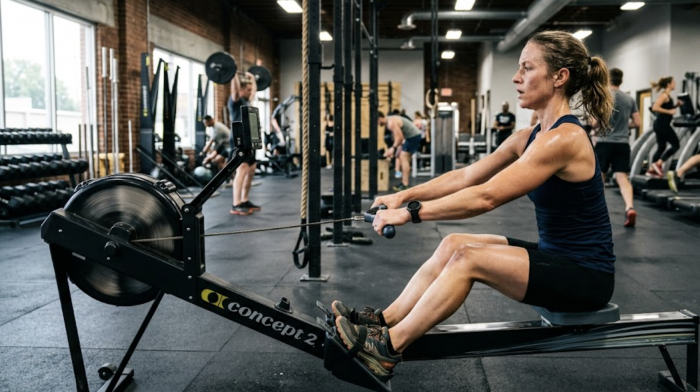
What is Endurance? (Defining the Terms)
Most people think of endurance as just cardio, but true stamina is multifaceted. To get fit, it helps to understand the three distinct types of endurance:
Cardiovascular Endurance:
- Definition: The ability of the heart, lungs, and circulatory system to deliver oxygen to working muscles for sustained periods.
- In Practice: This is your aerobic capacity. It dictates how long you can sustain activities like cycling, rowing, or brisk walking before you run out of breath.
Muscular Endurance:
- Definition: The ability of a muscle, or group of muscles, to perform repeated contractions against submaximal resistance without fatiguing.
- In Practice: This is your localised stamina. It dictates how many kettlebell swings you can do, or how long you can carry heavy shopping bags, before your muscles give out and burn.
Strength Endurance (The Hybrid):
- Definition: The ability to maintain near-maximal force production over multiple repetitions.
- In Practice: Lifting heavier weights for higher rep ranges (12–15 reps), which is crucial for athletes and functional daily strength.
Zone 2 Training:
- Definition: The “sweet spot” for building your aerobic base. It involves exercising at a steady, moderate intensity (roughly 60–70% of your maximum heart rate).
- Why it matters: This is where you build endurance with the least amount of wear-and-tear on your joints. If you are doing the ‘Talk Test’ and can comfortably hold a conversation, you are in Zone 2.

VO2 Max:
- Definition: The maximum amount of oxygen your body can absorb and use during intense exercise.
- Why it matters: Think of it as the ultimate measurement of your aerobic engine’s size. A higher VO2 Max is strongly linked not just to athletic performance but also to a longer, healthier life.
Lactate Threshold (The “Burn”):
- Definition: The tipping point during exercise, where lactic acid (the muscle soreness) begins to build up in your blood faster than your body can clear it.
- Why it matters: When you hit this threshold, your muscles start to burn, and fatigue sets in rapidly. Improving your endurance raises this threshold, allowing you to work harder and faster before the burn forces you to stop.
RPE (Rate of Perceived Exertion):
- Definition: A simple 1–10 scale used to measure how hard an exercise feels to you at that exact moment, rather than relying on fancy heart rate monitors.
- Why it matters: It helps you auto-regulate. A light jog on a day you feel great might be an RPE 4. That same jog after a terrible night of sleep might be an RPE 7. It teaches beginners to listen to their bodies.
What are the benefits of building endurance?
We know it improves your VO2 Max, but what does that actually mean for your daily life?
- The “One-Trip” Carry: Better muscular endurance means your grip, shoulders, and core don’t burn out when carrying heavy items or tackling daily chores.
- All-Day Energy: A stronger aerobic base improves mitochondrial function in your cells, meaning you naturally feel less sluggish when the 3:00 PM slump hits.
- Faster Recovery: A highly conditioned cardiovascular system flushes waste products (such as lactic acid) out of the body much faster. You will feel less sore after heavy lifting sessions or a long day of physical work.
- Stress Resilience: Steady-state endurance training physically lowers your resting heart rate and reduces cortisol (the stress hormone) over time.
Test Yourself: The FitKit 3-Minute Baseline Challenge
You can’t manage what you don’t measure. Before you dive into a new training plan, find your starting point.
The Challenge: Pick one exercise below. Press “Go” on the timer below, set to 3 minutes and see how much work you can do. Pace yourself!
- The Rower: Maximum distance (in metres) on an indoor rower.
- The Swings: Maximum kettlebell swings (using a moderate weight).
- The Step-Ups: Maximum bodyweight step-ups onto a box or bottom stair.
Your Action Step: Write your number down. Follow the protocols below for four weeks, bookmark this page, and come back to beat your score.
How to Build Endurance
Relying on outdoor running in the UK means your fitness is at the mercy of the rain and dark winters. Weather-proofing your routine with the right indoor gear ensures you stay consistent. Here are the best tools for building both cardio and muscular stamina at home or in the gym.
Tool 1: The Concept 2 Rower
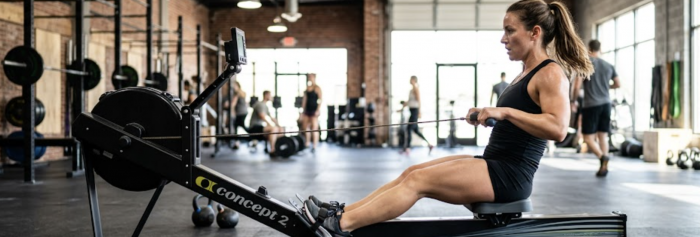
Rowing uses 86% of your muscles. It forces your cardiovascular system to work overtime while simultaneously building muscular endurance in your back, core, and legs.
Tool 2: Kettlebells & Slam Balls

High-repetition, ballistic movements build a rock-solid aerobic base without pounding your joints on the pavement. A single kettlebell takes up zero floor space but provides a brutal cardio-muscular workout.
Tool 3: Dual Adjustable Pulleys
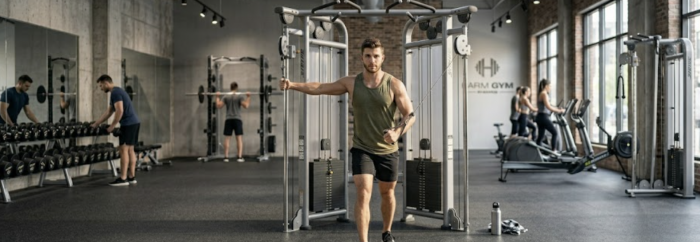
For those with joint pain, cable machines offer constant tension for high-rep sets (15–25 reps) safely, building muscular stamina without the risks associated with heavy barbell lifting.
The FitKit “Hybrid Equipment” Matrix
| Equipment Goal | Best Tool | Primary Benefit | Space Required |
| Max Calorie Burn | Indoor Rower | Full-body cardio + back strength | Moderate |
| Low-Impact Stamina | Assault / Air Bike | Joint-friendly, infinite resistance | Small |
| Functional Power | Kettlebells & Slam Balls | Core stability + explosive endurance | Minimal |
| Strength-Endurance | Dual Adjustable Pulley | Safe, high-rep muscle isolation | Large |
The 80/20 Rule
Most beginners fail at endurance training because they go too hard, too fast. To build stamina sustainably, use the 80/20 rule:
The 80% (Zone 2 / Base Building)
Spend 80% of your cardio time doing easy, steady movement.
- The Talk Test: You should be able to hold a conversation comfortably. If you are gasping for air, you are going too hard. Brisk walking, light cycling, or a slow row fall into this category.
The 20% (High-Intensity / The Ceiling)
The remaining 20% of your time is for pushing your limits. This percentage is for short bursts of intense effort to increase your top-end speed and lung capacity.
FAQs
Why do I feel down or exhausted after an endurance workout?
Post-workout fatigue is rarely just in your head. It is usually caused by Central Nervous System (CNS) fatigue, dehydration, or a sudden drop in blood sugar (hypoglycemia). Replenishing with fast-digesting carbohydrates and electrolytes immediately after training can prevent this crash and elevate your mood.
What should I eat before an endurance workout?
Keep it simple. Consume easy-to-digest carbohydrates 45–60 minutes before you start. Think of a banana, a small bowl of porridge, or a slice of toast with honey. Avoid heavy fats or excessive fibre right before training, as they slow down digestion.
Will endurance training make me lose my muscle mass?
No, as long as you fuel your body properly and continue to include resistance training in your routine. In fact, high-rep muscular endurance work can actually promote muscle growth while simultaneously improving your overall work capacity.
What is the best equipment for building stamina at home?
If you want maximum return on investment for a small space, a kettlebell, a pair of dumbbells, and a commercial-grade indoor rower (like a Concept 2) are the ultimate trio. Together, they cover both your aerobic engine and muscular stamina.
Ready to improve your endurance?
Building endurance doesn’t mean you have to slog through hours of miserable cardio. By combining cardio and muscular endurance, sticking to the 80/20 rule, and using the right equipment, you can build real-world stamina that translates to everyday energy. Make sure to explore our entire range of kettlebells, dumbbells, Concept 2 rowers and more to start your endurance journey today.
Read On
Comments are closed here.