
What is the Best Foam Roller for You? A Complete Guide to Muscle Recovery
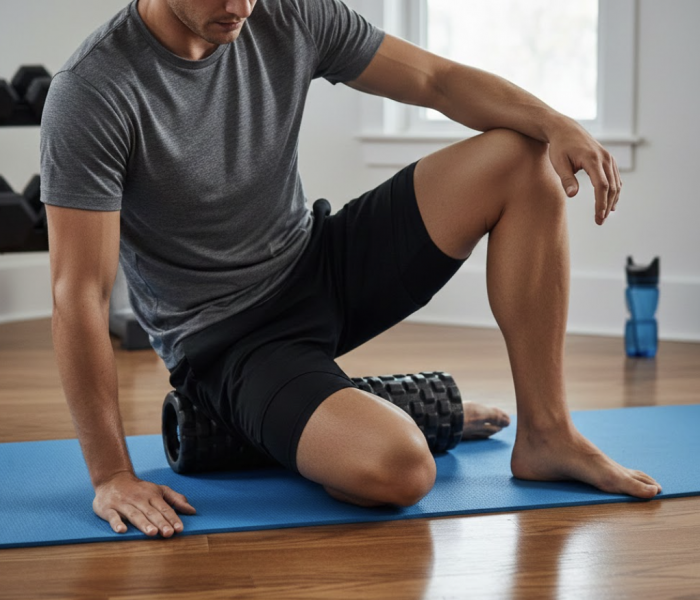
We have all been there: the day after a heavy leg day or a long run, walking down the stairs feels like a challenge. Muscle soreness and stiffness are common barriers to consistency in any fitness routine.
Enter the foam roller: a simple, cylinder-shaped tool that serves as a portable masseuse, offering the benefits of a deep-tissue massage without the recurring cost.
With so many shapes, sizes, and textures available, how do you know which foam roller is best for your needs? This guide will break down the science of self-myofascial release, help you navigate the different types of rollers, and explain exactly when to use them for maximum benefit.
Key Takeaways
- Release Tension: Foam rolling targets fascia and trigger points to improve mobility and reduce pain.
- Choose Wisely: The “best” roller depends on your experience level; beginners should start with softer, smooth rollers, while advanced athletes benefit from firm, textured options.
- Timing Matters: Rolling before a workout activates muscles, while rolling afterwards aids recovery and flushes toxins.
Jump To:
- What does foam rolling do?
- Why roll? The science of SMR
- Benefits of foam rolling for muscle recovery
- Different types of foam rollers and their uses
- Roller Density: Soft vs. Firm
- When to Roll: Activation vs. Recovery
- Product Recommendation: The Ranked List
- Detailed Comparison Chart
What does foam rolling do?
Simply put, it helps restore your muscles’ natural elasticity. Breaking up these adhesions reduces friction between muscle layers, improving your range of motion and decreasing recovery time.
Why roll? The science of SMR
To understand the benefits of foam rolling, we first need to understand what is happening beneath the skin. Foam rolling is a form of Self-Myofascial Release (SMR). While that sounds technical, the concept is quite simple.
- Fascia: Picture a thin, connective web that wraps around every muscle and organ in your body: this is your fascia. When healthy, it is flexible. But physical trauma, intense exercise, or even poor posture can make this web tight and restricted, limiting your range of motion.
- Trigger Points: Specific “knots” or tight spots within the muscle fibres that can cause pain.
- Blood Flow: Using a foam roller applies pressure to these tissues, smoothing out the fascia and releasing trigger points. This process increases blood flow to the area, delivering fresh oxygen and nutrients needed for repair.
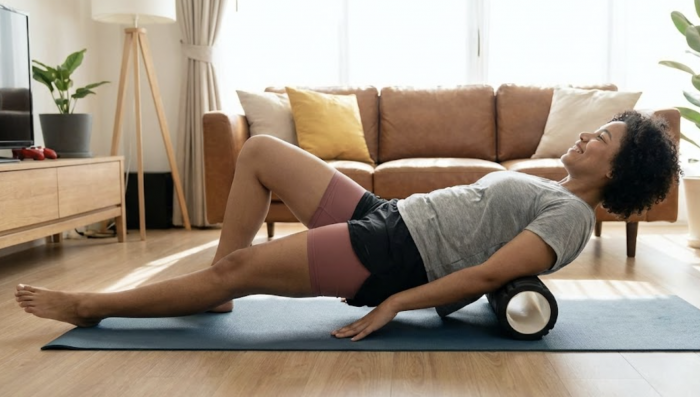
Benefits of foam rolling for muscle recovery
The core benefits are:
- Reduced Soreness: Lessens Delayed Onset Muscle Soreness (DOMS) by improving blood flow and waste removal.
- Increased Mobility: Restores natural Range of Motion (ROM), allowing you to train with better form and depth.
- Injury Prevention: Corrects muscular imbalances and prevents small knots from becoming serious injuries.
- Nervous System Reset: Signals the body to relax after high-intensity exercise.
Different types of foam rollers and their uses
Finding the best foam roller depends entirely on your pain tolerance and specific needs. Here is how they differ:
1. Smooth Rollers
These feature a consistent, flat surface. Smooth rollers distribute pressure evenly across the muscle, making them less intense than their textured counterparts.
- Best For: Beginners or those new to SMR. If you are just starting your recovery journey, a smooth roller provides a gentle introduction to the sensation of rolling without being overwhelming.
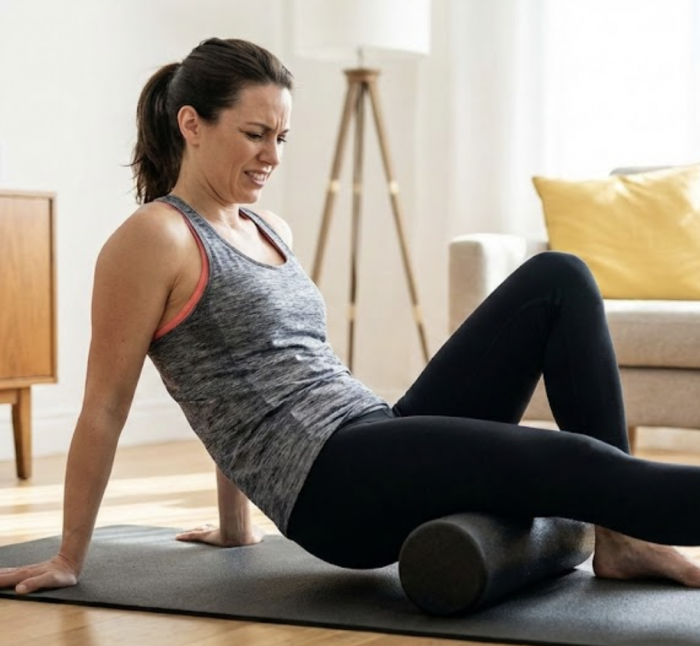
2. Textured / Grid Rollers
These rollers feature ridges, knobs, or grid patterns that mimic the hands and thumbs of a massage therapist.
- Best For: Targeted relief. The texture digs deeper into the muscle tissue to isolate specific trigger points. They are ideal for athletes or those with stubborn knots who need a more aggressive release.

3. Half-Rollers
As the name suggests, this is a foam roller cut lengthwise in half, creating a flat side and a rounded side.
- Best For: Balance and stability training, or for those who need a very stable surface for gentle stretching (such as lying lengthwise along the spine to open the chest). They are excellent for physiotherapy and rehabilitation exercises.
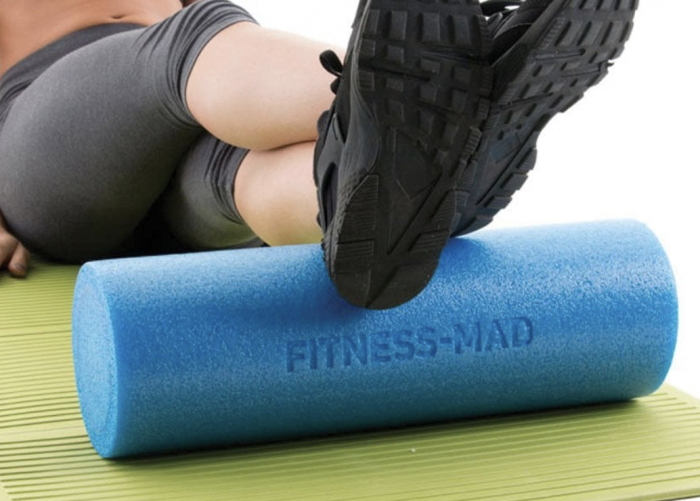
Roller Density: Soft vs. Firm
Just as important as the texture is the foam’s density.
- Soft (Low Density): These have a bit of “give” or cushion. Soft-density foam rollers are the most forgiving and perfect if you have very sensitive muscles or are recovering from an injury. They provide a soothing massage rather than deep-tissue manipulation.
- Firm (High Density): These are solid and offer very little give. They exert significant pressure and can penetrate deep into the muscle fascia. While they can be uncomfortable (and sometimes bordering on painful), they are the most effective for athletes with dense muscle mass or chronic tightness.
When to Roll: Activation vs. Recovery
A common question we hear is: “How often should you foam roll?” The answer is daily, if possible, but the way you roll changes depending on when you do it.
1. Pre-Workout: Activation
- Goal: To wake up the muscles and increase the range of motion.
- Technique: Roll quickly and rhythmically over the muscle groups you plan to train. Doing this increases blood flow and prepares the tissue for movement.
- Focus: Spend 30–60 seconds on key areas like calves, quads, and the upper back.
2. Post-Workout: Recovery
- Goal: To flush out metabolic waste and relax tight muscles.
- Technique: Roll slowly and deliberately. When you find a tender spot (trigger point), pause and hold the pressure there for 20–30 seconds until you feel the tension release.
- Focus: This is where you can spend more time on specific problem areas to help prevent delayed-onset muscle soreness (DOMS).
Product Recommendation: The Ranked List
1. Best Overall: Rejuvenation Professional Foam Roller (18″)
A commercial-grade powerhouse that offers the perfect balance of firmness and durability at an unbeatable price point.
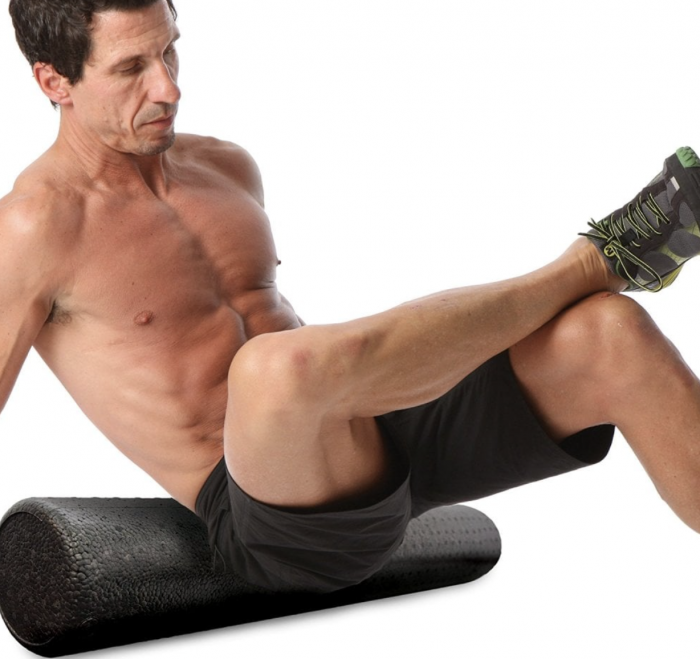
Product Overview: The Rejuvenation Professional roller is a staple in commercial gyms across the UK for a reason. It is constructed from ultra-durable foam designed to hold its shape even under rigorous, daily use. Unlike cheaper hollow models that can crack, this solid roller provides consistent, firm pressure to iron out deep fascia adhesions.
Specific Use Case: Best for weightlifters, CrossFitters, and general gym-goers who need a reliable, firm tool to flush out lactic acid and mobilise tight muscles pre- or post-workout.
Pros and Cons:
- + Commercial-grade durability (won’t warp).
- + Firm density for effective deep-tissue release.
- + Closed-cell surface is easy to clean/sanitise.
- – May be too intense for absolute beginners with low pain tolerance.
Pricing Tier: £ (Budget-Friendly)
2. Best for Targeted Deep Tissue / Advanced: Escape Fitness Ridge Roller
The ultimate tool for self-trigger point therapy, providing the closest experience to a dedicated deep-tissue physio session.

Product Overview: This is not a beginner’s roller. The Ridge Roller features a specialised three-dimensional surface with knobs and ridges designed to mimic the thumb, finger, and palm movements of a masseuse. This targeted compression lets you apply pressure precisely to stubborn trigger points and hard-to-reach areas, such as the upper back and shoulders.
Specific Use Case: Best for athletes, those with persistent tight hamstrings, glutes, or upper back pain, and users who feel their current smooth roller is no longer providing sufficient depth.
Pros and Cons:
- + Highly effective for advanced, targeted deep-tissue release.
- + Textured surface ensures better grip and control during rolling.
- + Excellent quality build designed for heavy use.
- – The intensity can be uncomfortable for beginners or extremely sensitive users.
Pricing Tier: £££ (Premium)
3. Best for Travel / Runners: Fitness Mad 45cm Foam Roller
A lightweight, no-nonsense roller that is perfect for targeting legs and IT bands on the go.
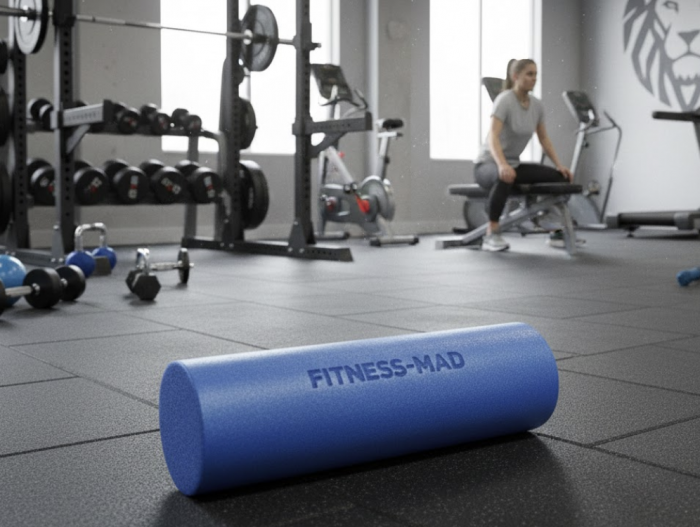
Product Overview: If you need a roller that you can toss in the back of the car or carry to the track, the Fitness Mad 45cm is your best bet. Made from lightweight LDPE, it is incredibly portable. Its 6-inch diameter and 18-inch length make it the perfect size for targeting the legs—specifically the IT bands, calves, and hamstrings—which are common trouble spots for runners.
Specific Use Case: Best for runners and cyclists who need a portable tool to keep their legs fresh, or for those with limited home storage space.
Pros and Cons:
- + Extremely lightweight and portable.
- + Perfect length for leg isolation work.
- + Cost-effective entry-level option.
- – LDPE foam is less dense/durable than the Rejuvenation model long-term.
Pricing Tier: ££ (Mid-Range)
Detailed Comparison Chart
| Rejuvenation Professional | Escape Fitness Ridge Roller | Fitness Mad 45cm | |
| Best For | Deep Tissue / Overall | Targeted Deep Tissue / Advanced | Travel / Legs |
| Density | Firm (High Density) | Extra Firm (Specialised) | Medium |
| Texture | Smooth | Textured (Ridges/Knobs) | Smooth |
| Size | 18″ x 6″ | 18″ x 6″ (Approx) | 18″ x 6″ |
| Durability | High (Commercial) | High (Specialist Moulded) | Medium |
| Pricing Tier | £ | £££ | ££ |
Find the perfect foam roller for your goals
Your choice comes down to your pain tolerance and goals. If you want a roller that will last a lifetime and really dig into those knots, the Rejuvenation Professional is the hands-down winner for value and performance. Don’t let soreness keep you from your next workout. Shop our full collection of recovery tools to find your perfect match.
Read On:
Comments are closed here.